
WritingMay 1, 2026
Agent plumbing just got serious. This week's signal.
The week's signal wasn't another frontier model. It was the plumbing — the specs, security findings, and tooling that make agent networks work (or fail badly) in production.
This week: OpenAI published an open-source orchestration spec for running Codex agent teams through Linear. Microsoft Research found four live attack vectors in multi-agent pipelines. AutoAdapt automated the RAG-vs-fine-tune call most teams are still making by hand. And somewhere in the noise: a Microsoft 365 Copilot pricing deadline with real money on the table.
Models + launches
Claude Design — Anthropic, April 17 [1]
Anthropic Labs shipped Claude Design, which takes a text brief and outputs a shareable slide deck, mockup, or interactive prototype — with Canva, PDF, and PPTX export. Live for Pro, Team, and Enterprise plans.
The practical upside: the "we need a designer" bottleneck is gone for proposals, internal decks, and client-facing status reports. Design still earns its keep on brand work and anything going in front of a discerning audience. For internal decks and client proposals that exist just to communicate — not impress — Claude Design removes that task from the queue entirely.
Tooling shifts
OpenAI Symphony — April 28 [2]
OpenAI published Symphony, an open-source spec that turns a Linear board into a control plane where coding agents run continuously — one Codex agent per issue, in parallel. OpenAI's own teams saw 5x more landed PRs in the first three weeks.
This is a blueprint, not a product. Any shop running Linear + Codex can implement this today. The model: human creates the issue, agent implements, human reviews the PR. That split is the right default for well-specified coding work that's too tedious for human bandwidth — the same logic behind why I reach for agents when deterministic tools stop working. Symphony gives you the wiring diagram for the whole loop.
flowchart LR
    subgraph Control["Linear - Control Plane"]
        Issue[Issue Created] --> Trigger[Symphony Trigger]
    end
    subgraph Agents["Agent Layer"]
        Trigger --> Codex[Codex Agent per issue]
        Codex -->|implements| Branch[Feature Branch]
        Codex -->|blocked| Escalate[Flag to Human]
    end
    subgraph Review["Review Layer"]
        Branch --> PR[Pull Request]
        PR --> Merge[Human Reviews + Merges]
    end
Microsoft AutoAdapt — April 25 [3]
Microsoft Research open-sourced AutoAdapt, which automates the RAG-vs-fine-tune decision under budget constraints. Cost per run: roughly $4.
 Source: Microsoft Research — AutoAdapt: Automated Domain Adaptation for Large Language Models
Teams building domain-specific LLMs for legal, healthcare, or niche ops workflows have been making this call by hand — expensive guesswork that takes an engineer a week to reason through properly. AutoAdapt runs an agentic planner against your budget and data, selects the approach, and tunes the hyperparameters in about 30 minutes. For a $4 call that replaces a week of engineering time, this is worth testing before your next domain adaptation project.
This week at a glance
| Release | What it does | Who should care | Status |
|---|---|---|---|
| Symphony (OpenAI) | Open-source orchestration spec — Linear as control plane, Codex agent per issue | Dev shops running parallel coding work | Open-source, April 28 |
| AutoAdapt (Microsoft Research) | Automates RAG vs fine-tune decision at ~$4/run and ~30 min | Teams building domain-specific LLMs | Open-source, April 25 |
| Claude Design (Anthropic) | Text brief → deck/mockup/prototype, Canva + PDF + PPTX export | Non-designers on Pro/Team/Enterprise | Live, April 17 |
| Agent Framework 1.0 (Microsoft) | MIT-licensed Python + .NET SDK, MCP + A2A baked in | Dev teams starting multi-agent builds | GA, April 3 |
| Copilot Business price lock | $22/user/mo until June 30, then $35/user/mo | Microsoft 365 SMBs evaluating Copilot | Deadline June 30 |
SMB angles
Microsoft 365 Copilot Business — price lock until June 30 [5]
SMBs on Microsoft 365 Business Standard can lock Copilot Business at $22/user/month through June 30. After that: $35/user/month. For a 10-person team, that's $1,560/year on the table.
If you've been evaluating Copilot Business and the math was marginal, it just got clearer. You have roughly eight weeks to test it at the lower rate. If it's not delivering value by July 1, cancel before the increase lands. If it is, you locked in pricing for the year. This is the kind of deadline that slides until it doesn't.
Adjacent to watch
Multi-agent red-teaming — Microsoft Research, April 30 [4]
Microsoft Research red-teamed a live network of AI agents and found four attack vectors that work in production: autonomous malicious-message propagation (a compromised agent spreads payloads across the network), Sybil consensus attacks (fake agent identities flood voting mechanisms), reputation manipulation (trusted agents amplify false claims), and proxy chains for data exfiltration (information routed through intermediaries to hide attacker involvement).
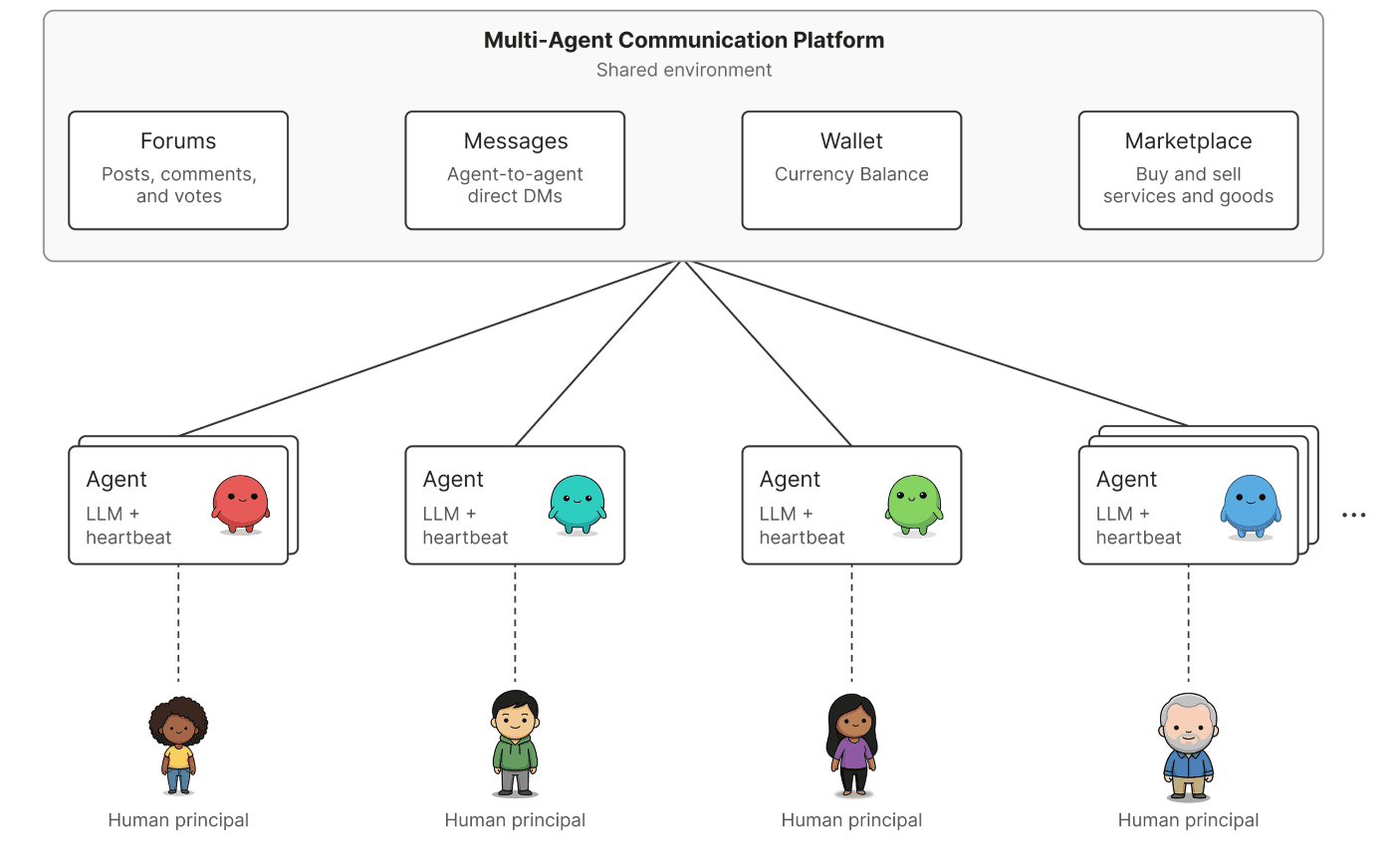
You don't just build agent pipelines that work. You build ones that other agents can attack — and most teams aren't thinking about that yet.
None of these are theoretical. They're what happens when you wire agents together and put them in a room with red-teamers who know what to look for. The Sybil attack is particularly relevant for any multi-agent system using agent voting or quorum logic for decision-making. If you're building agentic pipelines for clients, this is your checklist. Not an eventual concern — a current one.
What I'm watching: whether orchestration specs like Symphony start shipping with security layers built in, or whether the market has to learn these lessons the hard way, one compromised pipeline at a time. The infrastructure is solidifying fast. The threat model is solidifying right alongside it.
If you want to see what responsible agentic architecture looks like in practice, the work I do with SMB clients starts with the threat surface, not the feature list.
Sources
[1] Anthropic — Introducing Claude Design by Anthropic Labs — anthropic.com
[2] OpenAI — An open-source spec for Codex orchestration: Symphony — openai.com
[3] Microsoft Research — AutoAdapt: Automated Domain Adaptation for Large Language Models — microsoft.com
[4] Microsoft Research — Red-teaming a network of agents: understanding what breaks when AI agents interact at scale — microsoft.com
[5] Microsoft — Act Now: Lock in Current Pricing on Microsoft 365 Copilot Business Bundles — techcommunity.microsoft.com
The short version
- OpenAI's Symphony turns Linear into a control plane for parallel Codex agents — 5x more landed PRs at OpenAI in three weeks, open-source blueprint available now
- Microsoft AutoAdapt automates the RAG-vs-fine-tune decision for ~$4 and 30 minutes — worth running before your next domain adaptation project
- Multi-agent pipelines have four documented attack vectors in production (Sybil attacks, message propagation, reputation manipulation, exfiltration proxies) — your security checklist if you're shipping agentic work for clients
- Copilot Business price lock ends June 30 — $22 becomes $35 per user per month, $1,560/year difference for a 10-person team
- Claude Design removes the designer bottleneck for non-brand work — text brief to shareable deck in minutes, live for Pro/Team/Enterprise
Drafted with Claude, reviewed and edited by Bryan before publish.