
WritingMay 5, 2026
AI agents can buy from your store now. Your checkout can't.
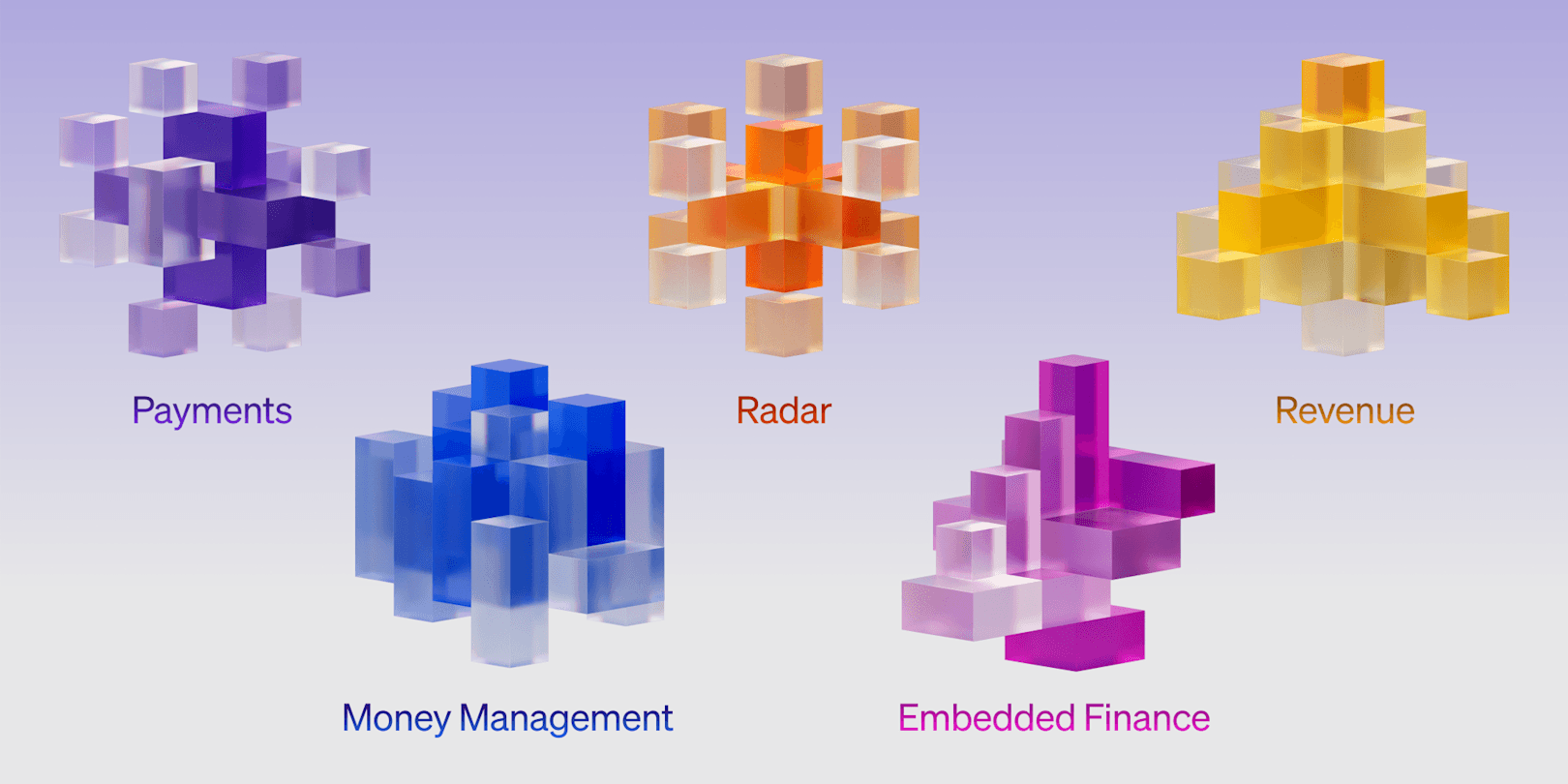
Stripe Sessions 2026 shipped the payment infrastructure for AI agents to buy from your store. That changes what "complete checkout stack" means for any SMB selling digitally — starting now, not some future quarter.
I'm not talking about AI helping you optimize a checkout form. I'm talking about AI as the buyer — an agent browsing your catalog, choosing a product, and completing a transaction using credentials a human delegated to it. Stripe built the payment rails for that this week. The agentic buyer class just got a bank account. Here's what you need to do with that information.
Every SMB operator selling online — on Shopify, WooCommerce, a custom stack, or a platform built on Stripe's API — has a decision to make: treat this as a 2027 problem or run a quick audit now and be ahead of the merchants who don't. I know which one I'd pick.
What Stripe actually shipped
Four products matter for SMB operators. I'll keep the descriptions tight because the implications section is where the real work is.
Agentic Commerce Suite — Upload your product catalog to Stripe, control which AI agents can access it from the dashboard, and let those agents discover and purchase your products directly. Payments run through Stripe's existing fraud detection. This is, functionally, the "make my store discoverable to AI shopping agents" button. It's not live for everyone yet — it's in early access — but the direction is unambiguous.
Issuing for Agents — Programmatically issue single-use virtual cards so agents can make autonomous purchases. The consumer use case exists (see Link Wallet below), but the more immediate SMB angle is B2B: if you run a platform serving other businesses, your clients will soon expect their AI agents to initiate procurement, manage expenses, and automate purchasing flows. Stripe just gave you the rails to build that.
Link Agent Wallet — OAuth-delegated payment credentials for consumer AI assistants. A user authorizes an agent through a standard OAuth flow; the agent gets a Shared Payment Token or single-use card — never the raw card number. Each transaction requires user approval today; automatic approvals on pre-set rules are on the roadmap. Stripe's Link already has 200 million consumers in the pool. That's a large potential buyer base that can now, in principle, delegate purchasing to an agent.
Checkout Studio — No-code checkout configuration with AI-assisted optimization, A/B testing, and live transaction replay. Less "agentic economy," more operator quality of life. Useful. Not the thing you need to act on this week.
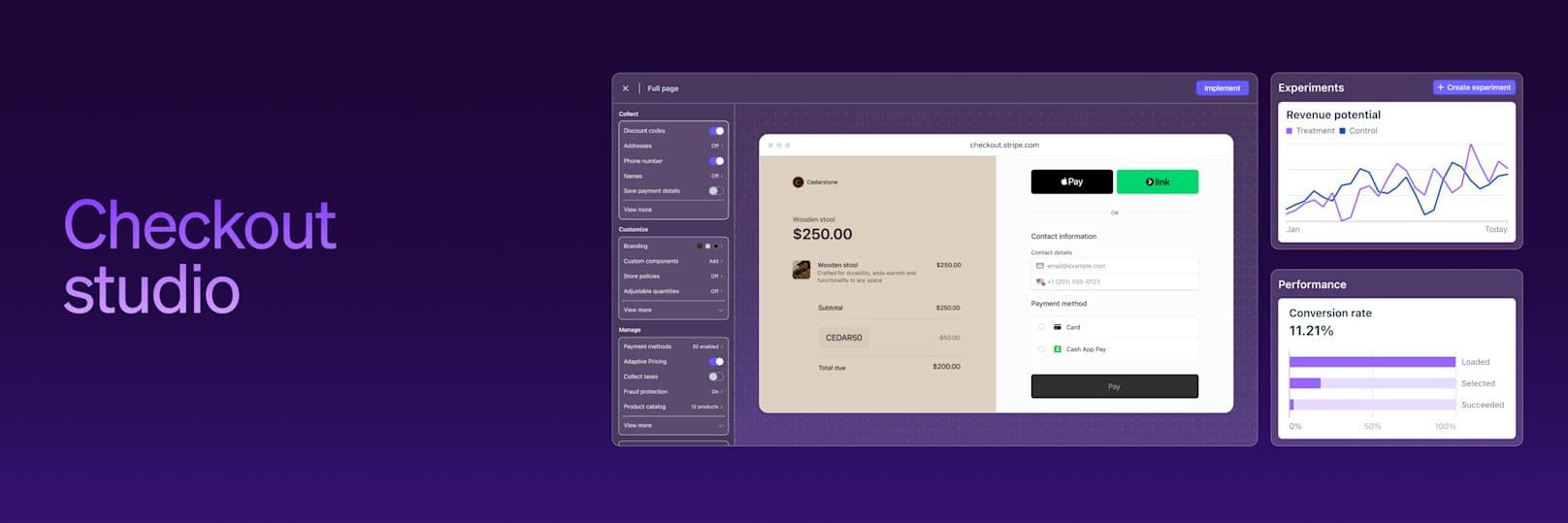 Source: Stripe — Everything we announced at Stripe Sessions 2026
The part most SMBs will miss
Here's how most operators will read this news: as a Stripe infrastructure story that doesn't affect them because they're already on Stripe and checkout is "handled."
That's not how this works.
Your checkout stack was built around a single buyer model — a human with a card. Name field. Email. Billing address. Shipping preference. Maybe a promo code. That's the shape of a human buyer, and every Shopify template, WooCommerce theme, and hosted checkout page was built around it.
An AI agent buying on behalf of a user looks structurally different:
- No name field needed — the credential is pre-authorized
- No email capture at checkout — it's already in the OAuth delegation scope
- The purchasing intent comes from structured catalog data, not a human reading your product page
- Spending controls (amount, merchant, currency) are set by the delegating human, not by the transaction
More importantly: if your product catalog isn't machine-readable, AI agents can't find you. A human can read a beautifully designed product page with three lifestyle photos and a 300-word description. An AI shopping agent is looking for a structured data feed — JSON-LD schema, a product catalog API, something it can parse and compare. If you don't have that, it moves to the next merchant that does.
The question isn't whether AI agents will shop online. Stripe settled that this week. The question is whether they can find your store.
That's the audit. Not "are my payment flows compliant with Stripe's new products" — your hosted checkout will handle most of that automatically. The real question is whether your product data is in a shape that agents can consume. Most SMB sites aren't there yet.
The 20-minute checkout audit
Run this before your next sprint planning or vendor review. The goal isn't to overhaul anything today — it's to know what's broken before someone else's agent skips you.
| Check | What to verify | Who's affected | Urgency |
|---|---|---|---|
| Product catalog structure | Do you have machine-readable product data? JSON-LD schema markup, Google Merchant feed, or a product API endpoint? | All merchants | High — determines discoverability |
| Stripe Agentic Commerce access | Have you checked the Stripe Dashboard for Agentic Commerce Suite early access? It's request-based now. | Stripe merchants | Medium — request access if relevant |
| Checkout fields for non-human buyers | Does your checkout require a name field, manual address entry, or CAPTCHA as a hard dependency? | Custom checkout builders | Medium — will need adjustment as AI buying scales |
| Issuing for Agents relevance | Do you serve other businesses? Do those clients need agent-initiated procurement or expense automation? | B2B platforms, vertical SaaS | High for this segment |
| Link Wallet category fit | Is your product category one where consumers use AI assistants to shop? Fashion, travel, consumer goods? | B2C merchants | Low now, rising fast |
| Stripe Workflows for revenue ops | Do you have manual dunning, refund handling, or subscription state changes? Workflows GA is now worth your time. | All Stripe users | Medium — real hours saved |
The two that warrant immediate action: product catalog structure and the Stripe Dashboard check. Everything else is a watch-and-prepare posture. You're not rewriting your checkout this week — you're assessing whether your data is in the right shape for what's coming.
Who needs to act now vs who can wait
Urgency depends on where you sit in the buyer chain.
flowchart TD
  Start([You sell online via Stripe]) --> Q1{Do you serve other<br/>businesses as clients?}
  Q1 -->|Yes — B2B platform| B2B[Check Issuing for Agents.<br/>Your clients will want<br/>agent procurement soon.]
  Q1 -->|No — direct to consumer| Q2{Is your category<br/>AI-assistant-adjacent?<br/>Fashion, travel, consumer goods?}
  Q2 -->|Yes| Consumer[Priority: structured catalog.<br/>Request Agentic Commerce Suite<br/>early access this week.]
  Q2 -->|No — niche B2C| Q3{Custom checkout flow<br/>or API integration?}
  Q3 -->|Yes — custom stack| Custom[Audit checkout fields for<br/>non-human buyer compatibility.<br/>Start now.]
  Q3 -->|No — hosted checkout| Wait[Standard Stripe checkout<br/>adapts automatically.<br/>Watch the dashboard monthly.]
  B2B --> Both[Action: structured catalog +<br/>Issuing for Agents access<br/>request + checkout audit]
  Consumer --> Both
The key divide is hosted vs. custom. If you're on Stripe's standard hosted Checkout page, Stripe will ship compatibility updates as the agentic products mature — you'll get most of this without building anything. That's the actual advantage of staying on the standard stack.
If you've built a custom checkout, you're running a Stripe plugin on WooCommerce, or you have a headless commerce setup with a bespoke payment flow: you own your own compatibility. Stripe's product updates don't automatically reach custom implementations. That's where your 20-minute audit becomes a project.
What shifts in the longer run
Stripe is building the payment layer for a world where AI agents are a distinct buyer class with their own authentication, their own purchasing patterns, and their own discoverability requirements. That's the bet behind all four product announcements.
It's not a radical bet. The infrastructure for agents to act autonomously has been assembling for a year: Anthropic's Model Context Protocol, OpenAI's Operator and tool-use capabilities, consumer AI assistants that can browse and act on the web. Payments were the last missing piece. Stripe just shipped it.
For SMB operators, the implication isn't "rebuild your checkout stack." It's two things:
First, make your product catalog machine-readable. That's an SEO improvement today and an agentic-commerce requirement tomorrow. JSON-LD schema markup on product pages, a structured feed, an API if you can manage it. This is work that pays off before AI agents become mainstream because it also improves your Google Shopping and comparison-engine presence.
Second, stop treating discoverability as a human-only problem. Your store's ability to surface in an AI agent's search results depends on structured data, not on beautiful design. The merchants who figure this out in 2026 will have a head start that compounds.
Stripe did the payment infrastructure work. Your job is the catalog layer. Both of those are doable this month without waiting for AI shopping agents to be a mainstream behavior.
If your checkout setup or product data is in rough shape — inconsistent schema, no feed, a custom implementation that hasn't been audited in two years — that's exactly the kind of ops audit I run before a client's next growth quarter. Book 15 minutes and I'll tell you specifically what to clean up first. No pitch deck; just the diagnosis.
Also worth reading: if the automation layer behind your checkout (order routing, inventory sync, dunning) is still running on expensive no-code tools, the stack-reduction playbook I wrote here covers when to replace what and how to price the difference.
Sources
[1] Stripe — Everything we announced at Stripe Sessions 2026 — stripe.com
[2] Stripe — Giving agents the ability to pay — stripe.com
The short version
- Stripe Sessions 2026 launched Agentic Commerce Suite, Issuing for Agents, Link Agent Wallet, and Checkout Studio — the payment infrastructure for AI agents as a distinct buyer class
- AI agents buy via structured catalog data and delegated OAuth credentials, not by reading your product pages — if your catalog isn't machine-readable, agents can't find you
- Hosted Stripe Checkout users get most of this automatically as Stripe ships updates; custom checkout builders need to audit now
- B2B platforms: check Issuing for Agents — your clients will want agent-initiated procurement workflows sooner than you expect
- The 20-minute audit has two immediate actions: check your product catalog structure and request Agentic Commerce Suite early access from the Stripe Dashboard
Drafted with Claude, reviewed and edited by Bryan before publish.