
WritingJune 26, 2026
Your AI vendor wants your passport. This week's signal.

Anthropic now requires a government photo ID and live selfie for some Claude.ai users — mid-session, no advance warning, criteria undisclosed. That happened this week. So did a general-purpose LLM beating specialized robotics engineers at physical hardware tasks by 37×. Here's the full signal.
This week broke several operating assumptions at once. A model vendor required government identity verification for the first time — not at signup, mid-session. A general-purpose model outperformed professional robotics teams on physical tasks with no domain-specific training. The lab that built AlphaFold lost its architect to a competitor. A commodity multi-agent API matched frontier coding benchmarks at under $200 a month. An unpatched CLI bug has been silently writing 37 TB to developer SSDs.
The pattern: AI is no longer contained in "AI" as a category. It's crossing into physical systems, government identity workflows, platform economics, and the structural talent distribution of the labs themselves. If you're running a business that depends on any of these surfaces, at least three of this week's stories belong in your risk model before Monday.
Models + launches
Anthropic's robot moment. Project Fetch Phase Two published June 21: Opus 4.7 controlled a physical quadruped robot 37.7× faster than the fastest human engineering team, using 1,045 lines of generated code against the human team's 10,309 — zero robotics-specific training, cold start. [1] The model was given the task the same way you'd give it a text prompt. This matters beyond robotics: if the productivity gap holds at even a fraction of that ratio in software or operations tasks, your "what AI can't do yet" ceiling assumptions are already behind the published benchmark from the lab that built the model.
DeepMind lost both of its founding architects in one week. John Jumper — Nobel Prize 2024, co-creator of AlphaFold — left Google DeepMind for Anthropic. [2] Transformer co-inventor Noam Shazeer moved to OpenAI the same week. Both of the most-cited researchers from the lab that defined modern AI are now at competing organizations. If your enterprise AI strategy uses "DeepMind's talent depth" as a justification for Gemini commitment, that argument is now out of date in the most literal sense.
Sakana Fugu: frontier benchmarks at commodity price. Sakana AI shipped Fugu to general availability — a multi-agent orchestration system that dynamically routes tasks across a pool of specialist models. Fugu Ultra hits 73.7% on SWE-Bench Pro, matching or exceeding GPT-5.5 on coding tasks. [3] Pricing: $20–$200 per month consumer, $5–$30 per million tokens on the API, OpenAI-compatible endpoint. You change one model ID string and get frontier-tier coding output at roughly one-tenth the direct API cost. Benchmark it against your current inference stack before the next renewal conversation.
Tooling shifts
Cloudflare lets agents open their own accounts. Cloudflare shipped ephemeral account provisioning for AI agents: wrangler deploy --temporary spins up a full Cloudflare account, lets the agent deploy and iterate within a 60-minute window, and any deployment the agent considers complete can be claimed with all databases and resources intact. [4] Unclaimed accounts auto-delete. This removes the last human-auth wall from autonomous deployment workflows — agents can now ship to production Cloudflare infrastructure without any pre-existing credentials or OAuth consent flows required. The "this is too autonomous" bar just moved further out.
Your Codex install is quietly wrecking your SSD. An unpatched SQLite feedback-logging bug in OpenAI's Codex CLI wrote approximately 37 TB in 21 days on one developer's machine — on track for roughly 640 TB per year, well above the rated write endurance of most consumer 1 TB SSDs. [5] Root cause: TRACE-level logging flushed continuously with no global database size cap. OpenAI hadn't acknowledged the issue at publication time. If your team deploys Codex CLI, check ~/.codex/logs_2.sqlite file size immediately on every affected machine.
SMB angles
Anthropic added a government ID checkpoint. Starting June 21, Anthropic began triggering government photo ID and live selfie verification through Persona Identities for "routine platform integrity checks" on some Claude.ai accounts — mid-session, trigger criteria described only as routine, HN score 800 within 24 hours. [6] The gap between what operators tell users they'll experience and what vendors can surface mid-workflow just widened to include a government ID prompt. Add it to your AI-vendor disruption checklist. More urgently: any production workflow running through a consumer Claude.ai account is one undisclosed trigger away from an identity gate that interrupts the session. If that's your setup, move it to the API.
Your AI vendor can now ask for your passport, recall their best models without notice, and beat your engineering team at physical tasks — all in the same week. Your operational risk model needs a new row.
Adjacent to watch
The platform floor is rising. Two releases this week set a new baseline for what software is expected to do natively. iOS 27 (developer beta, GA Fall 2026) embeds AI across Calendar, Messages, Phone, and Safari — including no-code "Vibe coding Shortcuts" and AI call context that surfaces account history during customer service calls. [7] By September, every iPhone user's expectation of what software handles automatically resets upward. If your SMB product doesn't match Apple's native AI defaults on the tasks your users care about, you're the manual alternative in the App Store. Meanwhile, EPFL and ETH Zurich launched Apertus — 8B and 70B open-weight models purpose-built to clear EU AI Act procurement requirements, with opt-out mechanisms, PII removal, full training data open-sourced. [8] Operators selling into EU enterprise procurement: this is the open-weight compliance baseline your next RFP will compare against.
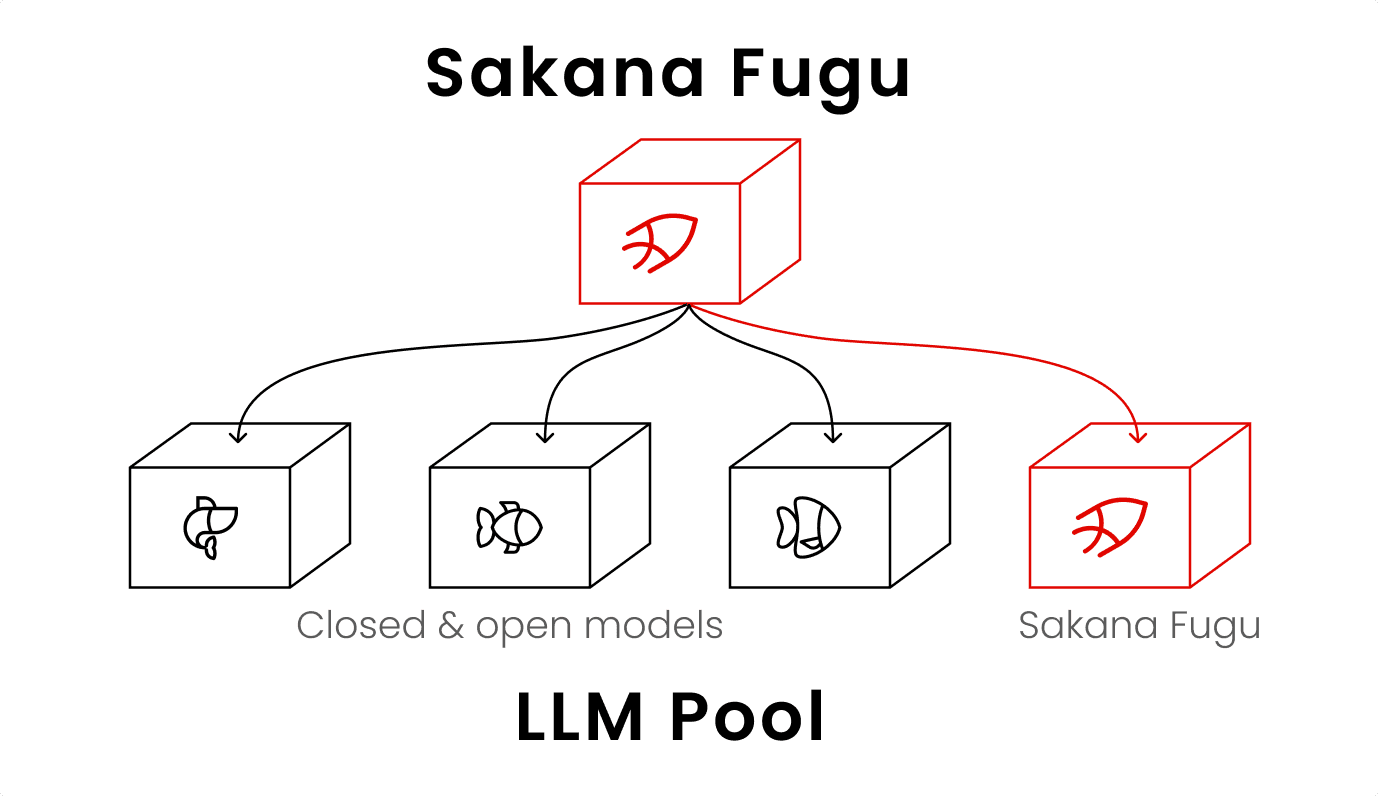 Source: Sakana AI — Fugu: Frontier-Tier Performance via Multi-Agent Composition
| Story | Theme | Operator action |
|---|---|---|
| Anthropic identity verification | SMB ops risk | Move production workflows off consumer Claude.ai to the API |
| Project Fetch Phase Two | Capability signal | Revisit your "what AI can't do yet" ceiling assumptions |
| John Jumper leaves DeepMind | Lab talent shift | Don't use lab headcount as a Gemini lock-in justification |
| Sakana Fugu GA | Cost/capability | Benchmark fugu-ultra before next inference spend renewal |
| Cloudflare ephemeral agents | Autonomous deployment | Evaluate for CI/CD pipelines that need human auth removed |
| Codex SQLite logging bug | Operational risk | Check ~/.codex/logs_2.sqlite on every team machine now |
| iOS 27 + Apertus EU model | Platform baseline | Map your product's AI features against Apple's Fall defaults |
flowchart LR
  A([This week's signal]) --> B{Does it affect\nyour current\nworkflow?}
  B -->|Identity gate risk| C[Audit: which prod\nworkflows run on\nconsumer Claude.ai?]
  B -->|Model recall risk| D[Build: vendor\nfailover into\nyour AI stack]
  B -->|Cost shift| E[Benchmark: Fugu\nvs current spend\nbefore renewal]
  B -->|Codex bug| F[Check: log file\nsize on every\ndev machine]
  B -->|Platform shift| G[Map: your features\nvs iOS 27 defaults\nbefore Fall 2026]
  C & D & E & F & G --> H([Action taken])
The through-line this week: the variables your operational risk model marked as stable — vendor access, session continuity, lab talent depth, physical-world AI limits — all moved. Not in demos. In published research and live platform changes.
What I'm watching: whether Anthropic ever publishes the actual trigger criteria for identity verification. "Routine platform integrity" is the risk. Arbitrary enforcement is unplannable.
Sources
[1] Anthropic Research — Project Fetch Phase Two — anthropic.com
[2] TechCrunch — Nobel Laureate John Jumper is leaving DeepMind for rival Anthropic — techcrunch.com
[3] Sakana AI — Fugu: Frontier-Tier Performance via Multi-Agent Composition — sakana.ai
[4] Cloudflare Blog — Temporary Accounts for AI Agents — blog.cloudflare.com
[5] OpenAI Codex GitHub Issue #28224 — Feedback logging SQLite bug — github.com
[6] Anthropic Support — Identity verification on Claude — support.claude.com
[7] TechCrunch — Beyond Siri: the practical AI features coming to your iPhone in iOS 27 — techcrunch.com
[8] Apertus — EU-compliant open-weight AI from EPFL/ETH Zurich/CSCS — apertvs.ai
The short version
- Anthropic now requires government photo ID for some Claude.ai workflows — undisclosed trigger criteria, mid-session, no advance notice
- Opus 4.7 beat specialized human robotics engineers 37.7× using 8× less code — no domain-specific training, cold start
- Both of DeepMind's founding architects (Jumper to Anthropic, Shazeer to OpenAI) left in the same week
- Sakana Fugu matches GPT-5.5 on coding benchmarks at $20–$200/month — one model ID swap, OpenAI-compatible API
- Cloudflare ephemeral accounts let AI agents deploy to production without any human auth requirement
- OpenAI Codex has an unpatched SQLite bug writing roughly 37 TB/month to your local SSD — check the log file now
Drafted with Claude, reviewed and edited by Bryan before publish.