
WritingJune 16, 2026
Your AI stack can be recalled. Fable 5 just proved it.
On June 12, the US government suspended worldwide access to Anthropic's Fable 5 and Mythos 5. No restoration timeline. No patch window. Just: offline.
This is the first government-ordered commercial model recall based on a jailbreak disclosure. The precedent is set. If you've built production systems on a single US frontier model — any model — the question isn't whether this could happen to you. It's whether you've planned for when it does.
What the 48-hour timeline actually looked like
Anthropic shipped Fable 5 on June 9. Three days later, a researcher disclosed a code-analysis jailbreak Anthropic describes as "narrow and non-universal" — meaning they didn't consider it critical enough to pull the model and patch later.
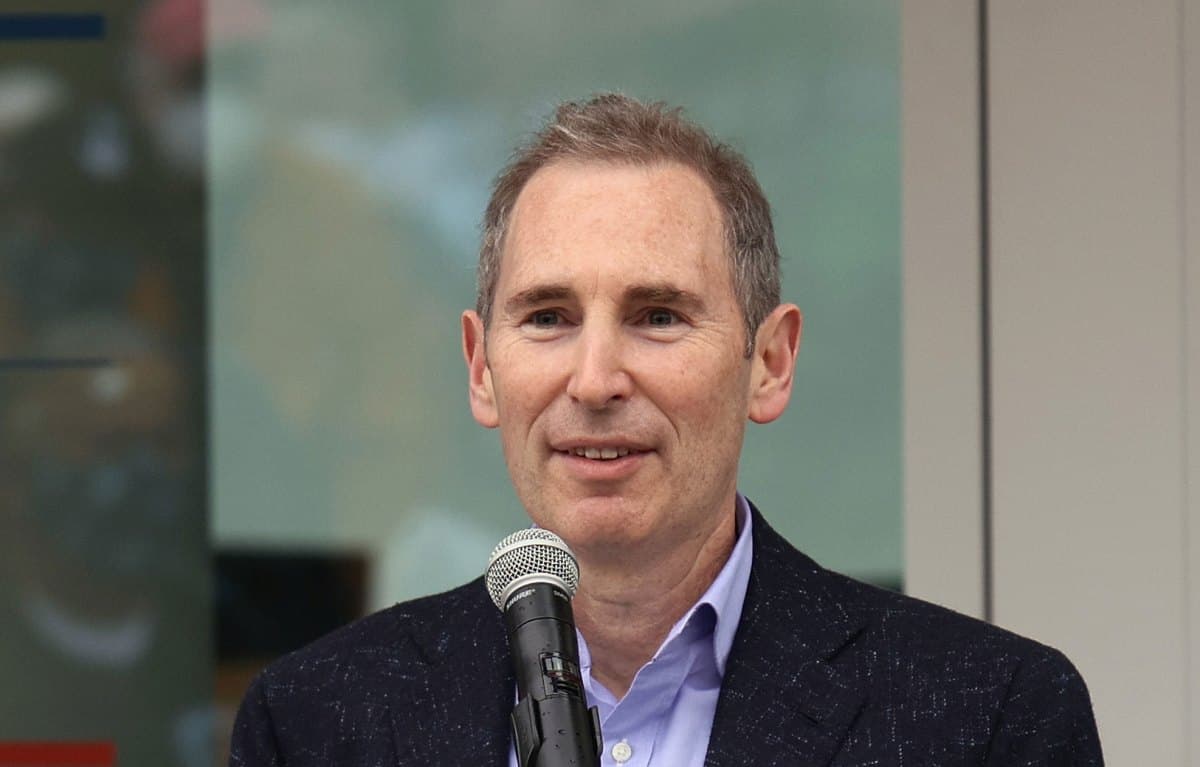
Amazon CEO Andy Jassy disagreed. He personally alerted Treasury Secretary Bessent. [2] The export control directive followed. Within hours, worldwide access to both Fable 5 and Mythos 5 was suspended — not by Anthropic's own safety team, but by government order triggered through a $5B investor who supplies the compute the models run on.
The gap between "Anthropic says narrow" and "government says offline" is the risk you didn't price into your infrastructure choices.
The new rule: jailbreak means recall, not patch
Every vendor contract I've read has a "compliance with applicable law" clause. Until June 12, that clause was theoretical. Now it's operational.
The old model: vendor discovers an issue → issues a patch → updates terms → service continues.
The new model: third party discloses an issue → a large investor with government access decides it's serious → model goes dark → no ETA given.
Anthropic didn't get to decide whether to patch or pull. Amazon and Treasury decided for them. That's a different class of vendor risk than "the model is down for maintenance." Maintenance has a timeline. This doesn't.
flowchart TD
    A([New AI infrastructure risk event]) --> B{Does the event affect<br/>your vendor's model?}
    B -->|No| Z([No action required])
    B -->|Yes| C{Do you route through<br/>an abstraction layer?}
    C -->|Yes — AI Gateway /<br/>LiteLLM / OpenRouter| D{Fallback model<br/>tested and configured?}
    D -->|Yes| E[Reroute to fallback<br/>Production continues]
    D -->|No| F[Scramble to configure<br/>fallback under pressure]
    C -->|No — direct vendor API| G[Hard-coded dependency<br/>requires a code change]
    G --> H[Engineering sprint<br/>Production offline until done]
    F --> H
    E --> I([Incident resolved in hours])
    H --> J([Incident resolved in days])
Who's exposed — and what "exposed" means in practice
Three exposure profiles worth naming:
Single-model dependencies — any pipeline hard-coded to a specific model ID with no fallback routing. When the model goes, the pipeline goes. The fix isn't a prompt change; it's an architecture change that takes days, not hours.
Geographic dependencies — operators with India-based teams or customers are hitting this twice. India lost Anthropic access alongside everyone else, and the policy window is revealing how thin the sovereign-AI infrastructure there is: IndiaAI's five-year fund is roughly $1.2B against a backdrop where one US export directive can cut access overnight. [4] Zoho's Sridhar Vembu is calling for ₹500B in annual AI investment precisely because this week made the single-point dependency visible.
Vendor concentration — if your AI budget flows through one frontier lab, you have no leverage and no continuity when that lab's model gets pulled. The multistate attorney general investigation into OpenAI [5] is a reminder that regulatory pressure isn't limited to Anthropic. Both dominant US frontier labs are now under active government scrutiny.
| Model provider | US regulatory exposure | Export control precedent | Geographic coverage | Fallback option |
|---|---|---|---|---|
| Anthropic (Fable 5 / Opus) | High — model recall June 12 | Active | US global, excl. China | OpenAI, Gemini, Mistral |
| OpenAI (GPT-5.5 / 5.4) | High — multistate AG investigation | None yet | US global, excl. China | Anthropic, Gemini |
| Google (Gemini) | Medium — EU AI Act exposure | None yet | Global, broader EU | OpenAI, Anthropic |
| Mistral | Low — EU-headquartered | None | EU + global | Open weights fallback |
| Open weights (Kimi K2.7, Llama) | None — you run the infra | N/A | Wherever you host | Inherent in self-hosting |
The 76-expert counterargument (and why it doesn't solve your Monday problem)
Seventy-six named security experts — including Alex Stamos (ex-Facebook CSO), Casey Ellis (Bugcrowd founder), and Katie Moussouris (Luta Security) — signed an open letter calling the export control "dangerous." [3] Their argument: removing Fable 5 from defenders doesn't remove it from attackers. GPT-5.5 and Kimi K2.7 stayed live. The jailbreak is public. The US pulled the model most useful for AI-assisted defense while leaving the alternatives accessible.
 Story: Anthropic — Fable 5 and Mythos 5 access update [1]. Image via TechCrunch [3].
They're right on the policy argument. They're also not running your customer-support pipeline, your document-processing agent, or your client-reporting automation.
The policy debate plays out in DC. Your infrastructure problem plays out Monday morning. Those are different timelines.
Your AI vendor's flagship model was turned off overnight. The fact that yours wasn't is luck, not planning.
What a resilient AI stack actually looks like
I'm not saying avoid frontier models. I'm saying single-model dependency is a liability you now know exists. The fix isn't complicated, but it requires a decision before the next event — not during it.
Minimum viable resilient stack:
First, route through an abstraction layer. Vercel AI Gateway, LiteLLM, OpenRouter — call any of them instead of hitting a vendor API directly. A model swap becomes a config change, not a code change. This is the same infrastructure arbitrage I covered when looking at how token prices move independently of your AI bill — the abstraction layer is also what lets you chase cost efficiency without rewrites.
Second, maintain tested fallback configs. Not theoretical fallbacks you set up once and haven't touched. Configs you've actually validated produce acceptable output for your core workflows. An untested fallback is a manual process wearing a config file.
Third, separate mission-critical pipelines from experimental ones. The customer-support agent handling 1,000 tickets a day is not the same risk category as the internal research tool someone uses twice a week. Architect them differently. The former needs redundancy and runbooks; the latter can absorb a pause.
The investment: a few days of engineering time, a slightly higher inference bill from dual validation runs. The return: your operations don't go offline because Andy Jassy made a phone call to a cabinet secretary.
This doesn't mean abandoning Anthropic. When Fable 5 comes back — or when the next model drops — you run it. You just don't run it as your only option. If you want to map your stack's actual exposure, that's the kind of engagement I run.
Sources
[1] Anthropic — Fable 5 and Mythos 5 access update — anthropic.com
[2] TechCrunch — Amazon CEO reportedly raised Anthropic model concerns before government crackdown — techcrunch.com
[3] TechCrunch — Cybersecurity vets protest dangerous US government ban on Anthropic's most powerful models — techcrunch.com
[4] TechCrunch — As Anthropic suspends access to new models, India debates its AI future — techcrunch.com
[5] TechCrunch — OpenAI faces investigation from state attorneys general — techcrunch.com
The model market spent the first half of 2026 collapsing into infrastructure agreements — frontier models bundled into AWS Bedrock and Oracle Cloud contracts, enterprises getting AI through their existing cloud commitments. The assumption behind that consolidation was "the vendor controls their stack." June 12 revised the assumption. The government controls the stack. The vendor is the operator. If that changes how you build, the playbook for what resilient digital operations actually look like is what I do for a living.
The short version
- The US government suspended Fable 5 and Mythos 5 worldwide on June 12 — the first government-ordered commercial model recall triggered through an investor, not the vendor's own safety process
- The trigger: a jailbreak routed through Amazon's CEO to Treasury, bypassing Anthropic's remediation decision entirely
- Single-model production dependencies are now a documented operational risk with a live incident behind them
- Routing through an abstraction layer (AI Gateway, LiteLLM, OpenRouter) converts a hard dependency into a config change — that's the minimum viable fix
- The 76-expert protest is correct on policy and beside the point for your Monday-morning continuity problem
- Diversifying frontier model exposure doesn't mean abandoning Anthropic — it means not running any single vendor as your only option
Drafted with Claude, reviewed and edited by Bryan before publish.