
WritingJuly 28, 2026
A Power Line Fell Near DC. It's Now an AI Grid Problem.
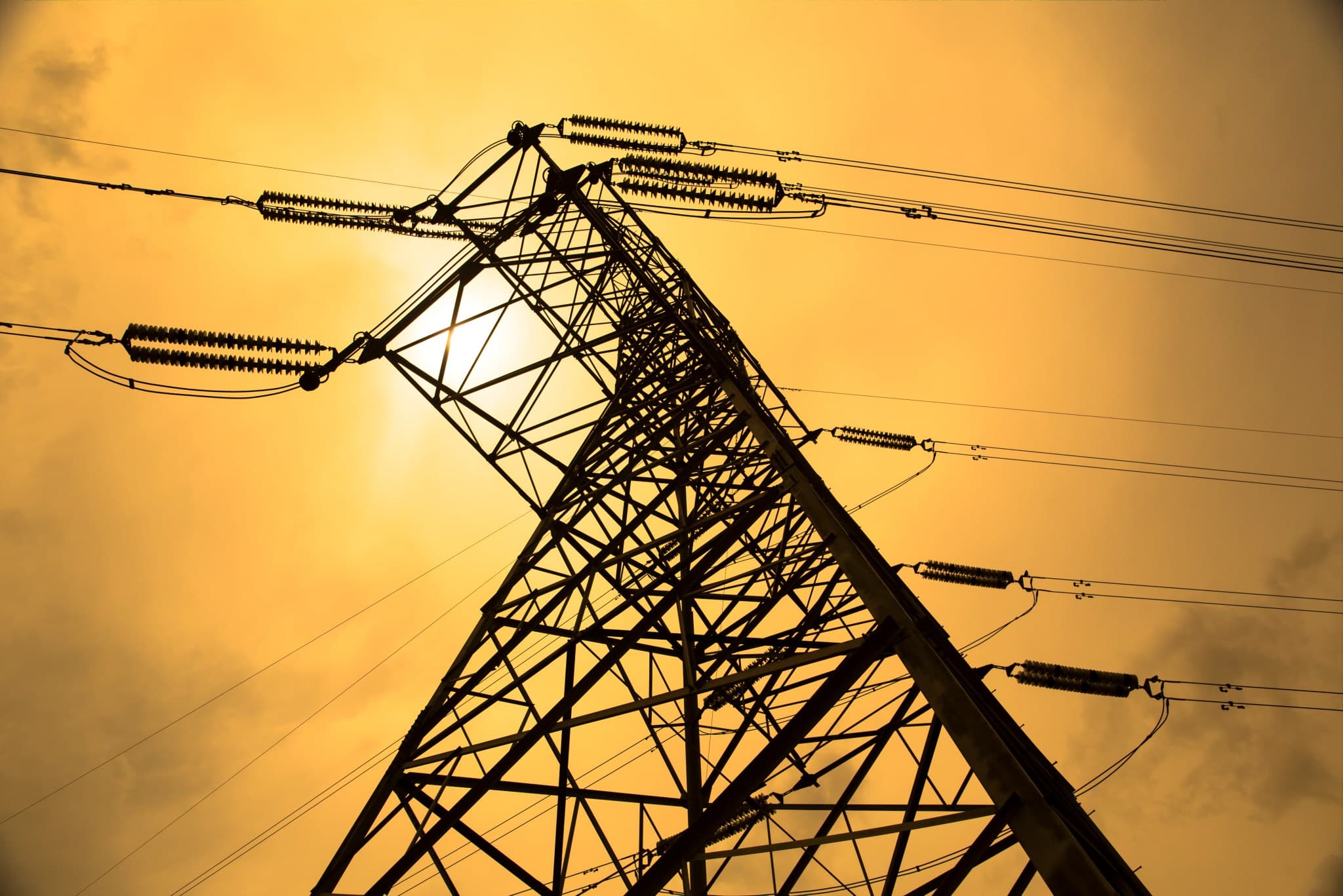
A transmission line failed near Data Center Alley in late July. In about 30 seconds, 3.1 gigawatts of AI data-center load dropped off the grid, voltage spiked from Northern Virginia to Chicago, and it took another 11 minutes to restabilize the system. No blackout, this time. That's the whole story people are reading it as — a near-miss. It's the wrong story.
I've written before about AI's infrastructure bill showing up as higher token prices. This is the same bill, different line item. The industry keeps modeling AI risk as something that lives in software — model drift, hallucination, a bad tool call. This event is a reminder that a meaningful chunk of AI risk now lives in copper and transformers, and that risk doesn't care whose API key you're using.
What actually happened
PJM — the grid operator covering 13 states from New Jersey to Illinois — runs on the assumption that load is predictable. A fault on a transmission line near a dense cluster of data centers broke that assumption. The facilities are wired with voltage-sensitive protection gear that disconnects automatically the moment grid conditions get weird, which is the correct call for protecting the hardware inside and the wrong call for grid-wide stability when enough facilities do it at the same instant.
3.1GW is roughly 3% of PJM's total demand at the time, gone in half a minute. Ricardo de Azevedo, CTO at ON.Energy, called it "the canary in the coal mine" — not because this specific event was catastrophic, but because it's part of a pattern [3].
This isn't the first time
It's the second event of this scale in two years. In July 2024, a lightning arrestor failed on a 230kV transmission line in the Eastern Interconnection, and roughly 60 Virginia data centers disconnected simultaneously, pulling about 1,500MW of load off the grid without warning [4]. This one was twice as large.
NERC — the continent's grid reliability regulator — investigated that 2024 incident and has since escalated. In May 2026 it issued a Level 3 Alert over the immediate risks that voltage-sensitive large loads like data centers pose to the bulk power system [5].
That's not a one-off equipment failure. That's a recurring failure mode nobody's fixed yet, and the fix isn't obvious: forcing "ride-through" behavior instead of automatic disconnection protects the grid but risks damaging the very hardware the protection logic exists to protect.
The number that matters more than this incident
Data centers were about 6% of PJM's total demand as of 2024, according to Synapse Energy Economics. The trajectory puts that at 24% by 2040. Zoom out further and BloombergNEF's estimate for 2035 US electricity demand is 83% higher than the one it published in December — data centers are now projected to draw roughly one-fifth of all US electricity by 2035, four times today's number [2].
flowchart TD
  A["Transmission line fault<br/>Northern Virginia, late July 2026"] --> B["3.1GW of voltage-sensitive<br/>data-center load self-disconnects<br/>in about 30 seconds"]
  B --> C["Grid voltage swings<br/>Northern Virginia to Chicago"]
  C --> D{"Grid operator response"}
  D -->|"11 minutes"| E["Frequency restabilized —<br/>no blackout, this time"]
  D -->|"Unmanaged repeat"| F["NERC Level 3 Alert, May 2026:<br/>voltage-sensitive large-load risk"]
  F --> G["Data centers hit 24% of<br/>PJM load by 2040 — up<br/>from 6% today"]
Every gigawatt in that curve is a gigawatt of demand a grid built for steady industrial load has to absorb from a source that behaves nothing like steady industrial load.
Volatility, not volume, is the actual problem
The instinct is to treat this as a capacity question — build more generation, problem solved eventually. IEEE Spectrum's reporting on grid instability makes the sharper point: the risk isn't how much power AI data centers draw on average, it's how violently that draw swings. AI training runs create millisecond-scale demand spikes and drops that a grid designed around slow-moving factory and residential load was never built to absorb, and the clusters where this hits hardest — Northern Virginia's Data Center Alley chief among them — are exactly where this event happened [1].
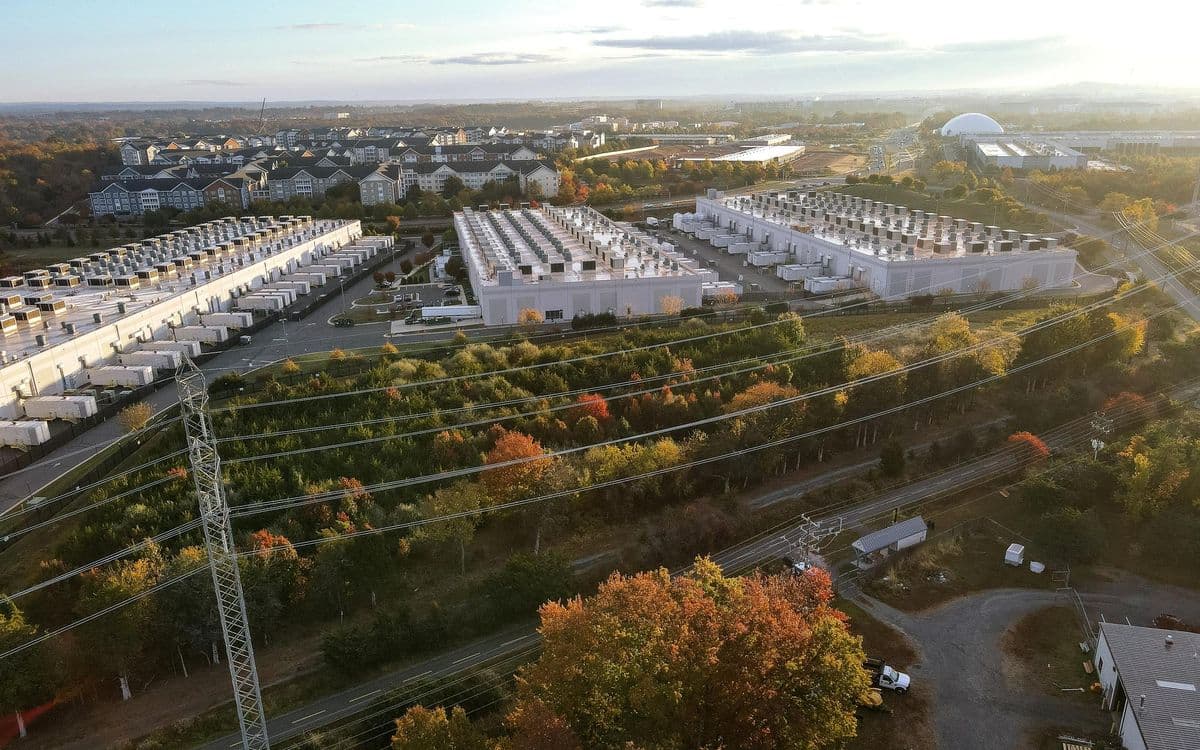 Source: IEEE Spectrum — How Data Center Grid Instability Threatens Reliability
The next AI outage that hits your business won't be a bug. It'll be a substation.
What the fixes actually look like
Nobody's shipped a grid-wide fix. What exists is a patchwork, and the patchwork tells you who's paying for reliability and who's betting someone else will.
| Fix | What it actually does | Who's running it | The catch |
|---|---|---|---|
| Ride-through mandate | Forces large loads to stay connected through a voltage dip instead of self-disconnecting | ERCOT (Texas), rule-based | Retrofitting existing facilities is a capital cost nobody's volunteering to eat first |
| UPS / battery buffering | Campus-scale battery and power-conversion gear absorbs the disturbance before it reaches the grid | Individual operators like ON.Energy, deal by deal | Solves it site by site, not grid-wide |
| Sequential disconnect protocol | Staggers how co-located facilities drop off so they don't all trip in the same instant | Proposed, not adopted — floated by ON.Energy's CTO as the orderly alternative | Still a proposal. This event happened without one |
| Status quo | Nothing. Facilities disconnect on their own protection logic, grid operators absorb whatever happens | Most of PJM territory, today | This is the default until a regulator or a big enough outage forces a change |
That last row is the operative one. As of this week, "absorb the swing and hope the grid operator has 11 minutes" is still the plan for most of the territory this happened in.
What this means if you're not building a data center
You're probably not negotiating power-purchase agreements. But every AI vendor you depend on is downstream of exactly this infrastructure, and none of the SLAs I've read price in grid volatility as a named risk category. They cover software uptime. They don't cover "the region your inference runs in had a voltage event and your API calls queued for four minutes."
I model vendor risk for clients the same way I model any single point of failure — not "will this happen" but "what do we do the day it does." Right now the honest answer for most AI-dependent workflows is nothing, because nobody's built the fallback. That's worth fixing before your vendor's outage report mentions a power line instead of a bad deploy. It's the same audit instinct I bring to a client's software stack — where I usually find redundant tools costing more than the risk they're insuring against — applied one layer down, to the infrastructure the software sits on.
The grid isn't going to catch up to AI demand by being asked nicely. Every fix on that table costs someone money, and right now that someone hasn't been decided. Until it is, the honest move is to stop treating your AI vendor's reliability as a software problem and start treating it as an infrastructure bet — because that's what it's always been.
Sources
[1] IEEE Spectrum — How Data Center Grid Instability Threatens Reliability — spectrum.ieee.org [2] TechCrunch — Data centers expected to use 4x more electricity by 2035 — techcrunch.com [3] TechCrunch — One fallen power line exposed a growing AI data center problem — here's how to fix it — techcrunch.com [4] Data Center Dynamics — Virginia narrowly avoided power cuts when 60 data centers dropped off the grid at once — datacenterdynamics.com [5] Renewable Energy World — NERC issues Level 3 Alert to address 'immediate risks' data center loads pose to the grid — renewableenergyworld.com
The short version
- A fallen power line near DC dropped 3.1GW of AI data-center load off the PJM grid in about 30 seconds in late July — it took another 11 minutes to restabilize
- This is the second event of this scale in two years, and NERC escalated to a Level 3 Alert in May 2026 over voltage-sensitive large-load risk
- Data centers are ~6% of PJM's demand today, projected to hit 24% by 2040 — and BloombergNEF now projects data centers at one-fifth of all US electricity by 2035
- The real risk is volatility, not volume — AI training creates millisecond-scale demand swings a grid built for steady industrial load can't absorb
- No fix is grid-wide yet. Ride-through mandates, battery buffering, and sequential disconnect protocols are all partial, site-by-site, or still proposals
- Your AI vendor's SLA almost certainly doesn't price in grid volatility as a risk category — that's a gap worth asking about before it's the reason your workflow stalls
Drafted with Claude, reviewed and edited by Bryan before publish.