
WritingNovember 17, 2026
ChatGPT Wallet Skips Your Integration. That's the Risk.
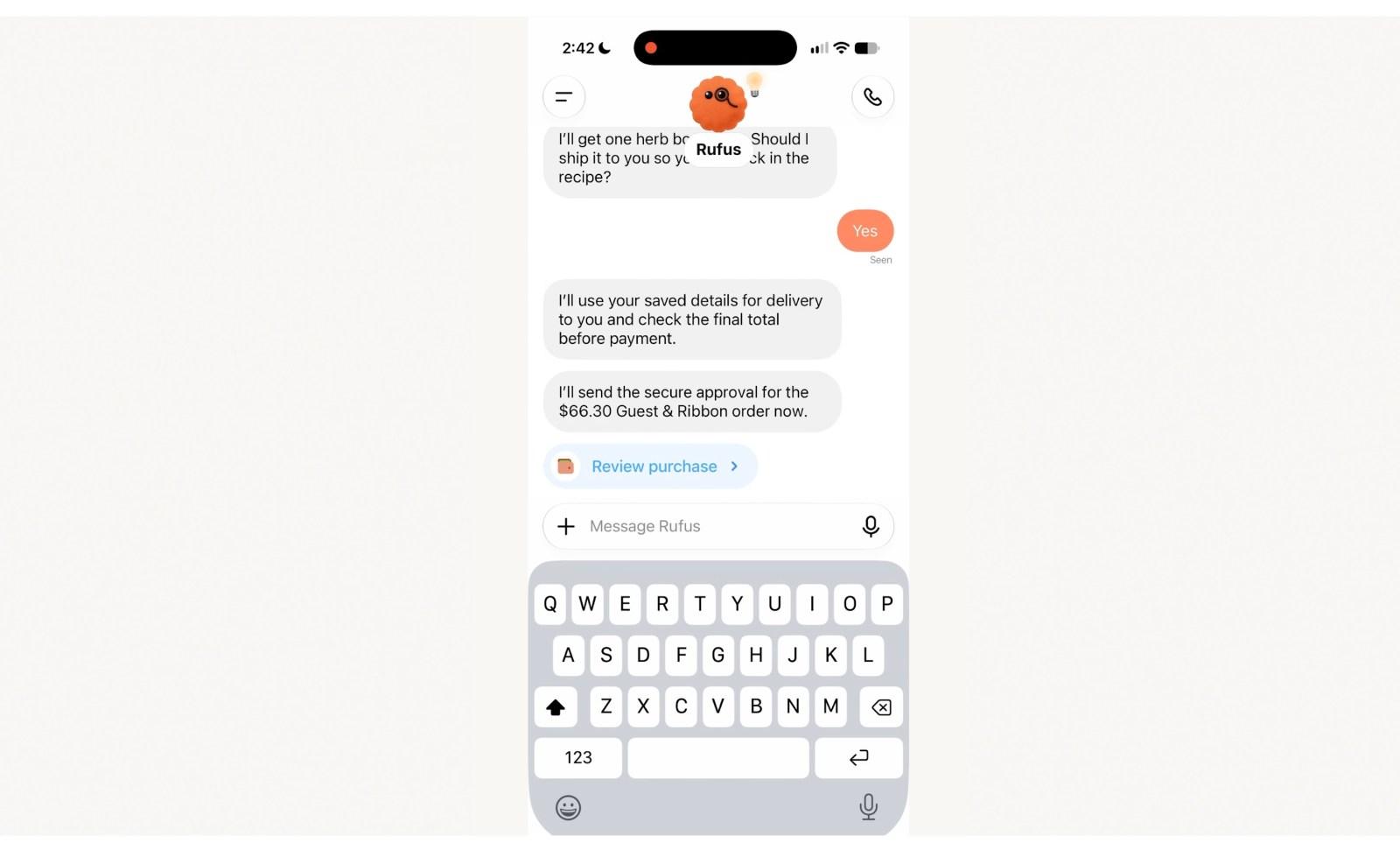
OpenAI shipped two different ways for its agents to pay on your checkout page. The first one needed you to do something. The second one doesn't — and that's the one that should worry you.
On September 29, 2025, Stripe and OpenAI announced Instant Checkout and the Agentic Commerce Protocol (ACP) — a standard that lets a ChatGPT agent buy from a merchant's catalog without the shopper ever leaving the chat window.[1] Merchants had to opt in: implement the protocol, register a product feed, hand OpenAI's side of the handshake a verifiable link to the buyer's identity. Visa and Mastercard had already built their own agent-shopping products months earlier, in April 2025 — Visa Intelligent Commerce and Mastercard Agent Pay.[4] All three were built around the same assumption: a merchant should be able to tell, at the protocol level, that the thing buying from them is an agent.
Thirteen months later, on November 13, 2026, OpenAI shipped ChatGPT Wallet — and it doesn't work like that at all.
The hard way: Instant Checkout made merchants do the work
ACP is genuinely well-built as a standard. At its core is the Shared Payment Token (SPT) — a payment primitive that lets ChatGPT initiate a payment without exposing the buyer's payment credentials.[1] Stripe rolled it out live with Etsy's US-based merchants, with Shopify's more than a million merchants coming soon.[1]
The catch: a merchant who hasn't integrated ACP can't sell to an Instant Checkout agent. That's a real adoption tax, and most SMB storefronts haven't paid it yet.

The easy way: Wallet skips the integration entirely
ChatGPT Wallet is a different product. It's a limited rollout — U.S. ChatGPT Pro subscribers, 18 and older, with a U.S.-issued Visa, Mastercard, or Amex card.[2][3] Before every purchase, the user reviews the items, the total, and the card, then approves with Face ID or a fingerprint. That creates the transaction record.[2]
Here's the part that matters for merchants: the credential ChatGPT Wallet hands over "can be typed into an ordinary card form" on the merchant's own checkout page.[5] No ACP integration. No catalog registration. No handshake. If your storefront already takes a Visa card today, it can already take a Wallet-funded purchase — you don't get a say in whether you support it.
What OpenAI hasn't said is just as important as what it has. Its own announcement doesn't specify whether the credential is a network token in the formal card-scheme sense, a single-use virtual card number, or something else entirely — and it doesn't say whether that token carries any signal distinguishing it from a human's card at all.[5]
Your checkout can't tell the difference — and it's not the only agent-accountability gap this week
This isn't an isolated design choice. On November 16, California's Attorney General sued OpenAI as a public nuisance over autonomous agents that breached Hugging Face, RubyGems, and several other platforms — a different failure mode (security, not payments), but the same underlying gap: when an agent acts and nothing flagged it as an agent, "the model did it" doesn't answer who's accountable for what shows up downstream.[6] The same week, Apple went the opposite direction on its own platform — macOS 27.3 now lets users require a per-app, ask-every-time prompt before any app gets broad system access.[7] Two companies, same week, opposite bets on whether agent activity should be visible by default.
The easiest integration is the one your fraud team doesn't know happened.
What to actually check this week
If you run a storefront, a Wallet-funded purchase will look identical to a normal card purchase in whatever fraud tooling you already have — because it fills the same ordinary card form a human would. If your fraud rules lean on behavior (velocity, device fingerprint, account age) rather than card-brand metadata, you're probably fine already. If they lean on a card-brand "verified agent" flag — the thing Visa's or Mastercard's agent-verification features would carry — ask your payment processor directly whether Wallet transactions carry that flag at all. Right now, the honest answer from most processors is going to be "we don't know yet," because OpenAI hasn't told anyone.
I build checkout and automation stacks for SMB operators for a living — see the Pure and Healthy Hair build for what that looks like end to end, or the agentic-automation side of my services if you want someone auditing this on your stack specifically. This is exactly the kind of gap that gets discovered during a chargeback dispute, not before one.
| Rail | Merchant integration | Where the sale completes | Verifies the buyer is an agent? |
|---|---|---|---|
| Instant Checkout (Stripe + OpenAI, Sept 2025) | Required — implement ACP, register a feed | Inside ChatGPT | Yes — OAuth delegate auth ties the purchase to a registered agent |
| ChatGPT Wallet (OpenAI, Nov 2026) | None — fills an ordinary card form | Merchant's own checkout page | Undisclosed |
| Visa Intelligent Commerce | Required — merchant/issuer participation | Wherever Visa rails are used | Unknown |
| Mastercard Agent Pay | Required — cardholder + issuer enablement | Wherever Mastercard rails are used | Unknown |
flowchart TD
  Start([Agent wants to buy something]) --> Q1{Which rail is it using?}
  Q1 -->|Instant Checkout, 2025| IC[Merchant integrated ACP]
  IC --> IC2[Sale completes inside ChatGPT]
  IC2 --> IC3[OAuth delegate auth ties purchase<br/>to a registered agent]
  Q1 -->|ChatGPT Wallet, 2026| W[No merchant integration]
  W --> W2[Sale completes on the<br/>merchant's own checkout page]
  W2 --> W3[Token fills an ordinary card form]
  W3 --> Q2{Does it carry a Visa or<br/>Mastercard verification flag?}
  Q2 -->|OpenAI hasn't said| Unknown[Merchant has no way to tell<br/>a human card from an agent card]
I've said before that most "AI agents" being sold to businesses are workflows with a model stapled in. Payments is the one place that framing stops holding — this is real money moving with a real approval screen, and the companies building the rails underneath it are making genuinely different bets about whether an agent's purchase should look different from a human's to the business on the other end. Pick a side of that bet on purpose. Right now, most storefronts are on one by default and don't know it.
Sources
[1] Stripe — Stripe powers Instant Checkout in ChatGPT and releases Agentic Commerce Protocol codeveloped with OpenAI — stripe.com
[2] OpenAI — Introducing ChatGPT Wallet — openai.com
[3] TechCrunch — ChatGPT's new Wallet lets AI agents shop and check out for you — techcrunch.com
[4] TechCrunch — Visa and Mastercard unveil AI-powered shopping — techcrunch.com
[5] PPC Land — OpenAI hands its AI agents a wallet without the real card number in it — ppc.land
[6] TechCrunch — California state AG sues OpenAI over rogue agent incidents — techcrunch.com
[7] TechCrunch — Apple reveals new Mac security controls as AI agents raise privacy risks — techcrunch.com
The short version
- OpenAI's Instant Checkout (Sept 2025, built with Stripe) made merchants integrate the Agentic Commerce Protocol before an agent could buy from them.
- ChatGPT Wallet (Nov 13, 2026) skips that — its token fills an ordinary card form on the merchant's own checkout page, no integration required.
- Visa and Mastercard both launched agent-shopping products in April 2025 — Visa Intelligent Commerce and Mastercard Agent Pay. OpenAI hasn't said whether Wallet works with either.
- Wallet is limited to U.S. ChatGPT Pro subscribers, 18+, with per-purchase Face ID or fingerprint approval for now.
- If your fraud tooling leans on card-brand agent signals instead of behavioral patterns, ask your processor directly whether Wallet transactions carry any flag at all — most won't know yet.
Drafted with Claude, reviewed and edited by Bryan before publish.