WritingOctober 20, 2026
Even Google Routes to Claude Now. Stop Picking One Model.
Google just shipped an enterprise AI agent that routes work to Claude models by default — not as a fallback, as a named option in Google's own launch post. If the company selling you Gemini doesn't trust Gemini by itself, your automation stack shouldn't trust one model either.
On October 8, Google Cloud announced its "Gemini agent": one prompt box that plans, codes, and ships finished work for an enterprise team, built to route tasks across Google's own Argon, Flash, Omni, and Gemma models — and, named explicitly in the launch post, "Claude models from Anthropic." [2] Eleven days later, Nvidia open-weighted two new agent models that Nvidia says EY, Ramp, CrowdStrike, and Salesforce are already running. [3] And sitting between those two headlines, Vercel's own AI Gateway data shows the pattern underneath both: Anthropic's share of gateway spend fell almost 20 points in a single month, and a third of teams switched their primary AI lab outright. [1] Three vendors said the same thing this month without coordinating it: nobody, including the labs, expects you to pick one model and stay there.
Anthropic's own numbers made the case first
Vercel runs an AI Gateway that sits in front of every major model provider, and its October production index is the closest thing to real usage data instead of vendor marketing. [1] The headline isn't that open-weight models are growing — it's how fast the money followed the traffic. Open-weight models carried 71.5% of all tokens routed through the gateway in September. Spend on those same models hit 23% of total gateway dollars, more than quadrupled from just 5% in June.
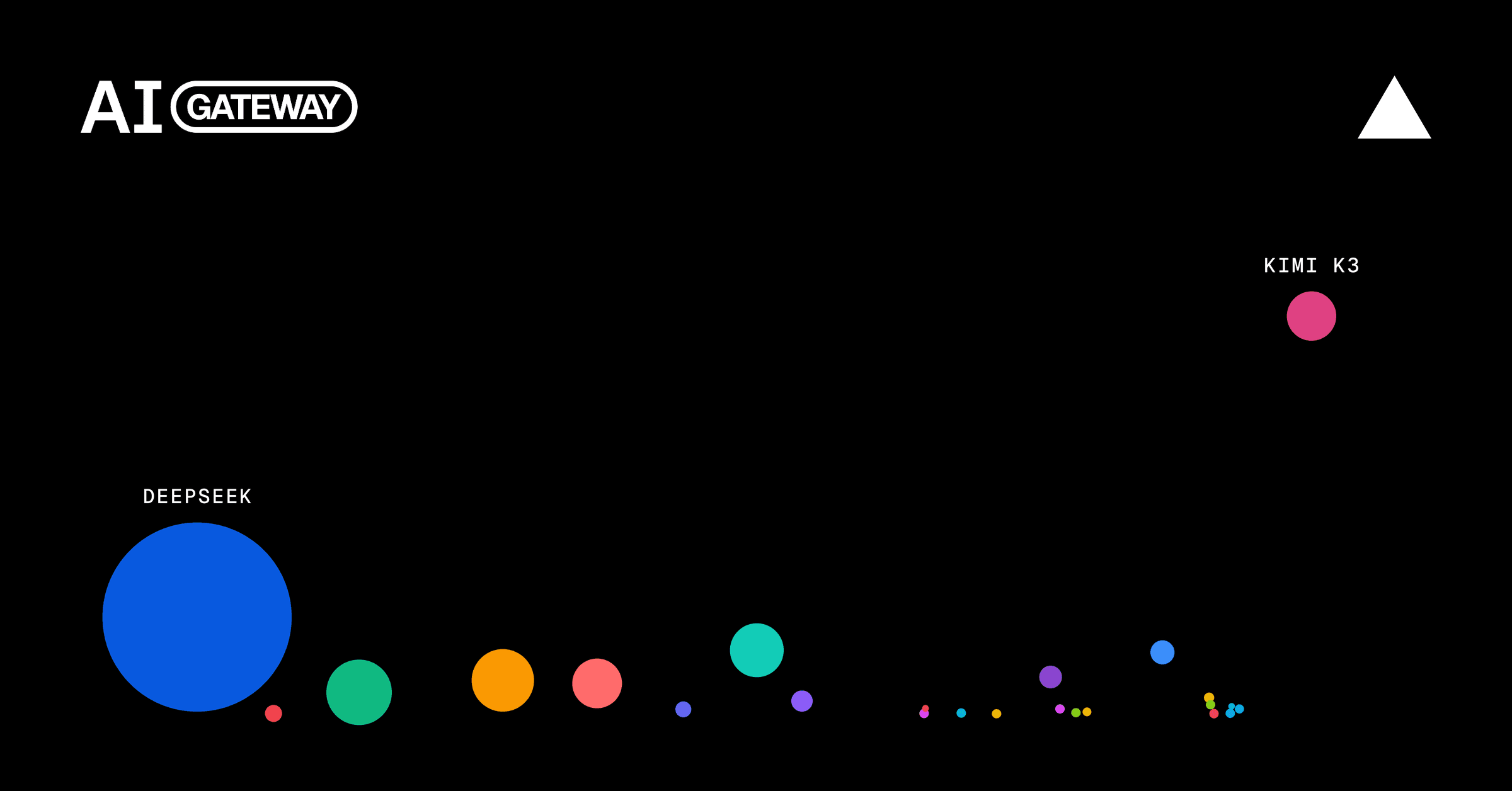 Source: Vercel — AI Gateway Production Index, October 2026
Anthropic felt that shift directly. Its share of total gateway spend fell from 63.7% in August to 43.9% in September — almost 20 points in one month, with the Opus family alone dropping from roughly half of gateway dollars to about a third. Nearly half of all teams on the gateway changed their most-used model in September. A third switched their primary AI lab entirely — an index record.
None of this means Claude got worse. It means the cost of switching dropped to roughly zero, and teams are treating model choice the way they already treat cloud compute: a live decision, re-evaluated monthly, not a vendor relationship you sign once.
Google put the quiet part in a launch post
Here's the detail that should bother anyone still building automations with one model's SDK hardcoded in: Google's own launch announcement for its flagship enterprise agent names Claude as a routing target. Not "other models eventually" — Claude, by name, today, alongside Google's own model family. [2]
The deployment numbers aren't just press-release pull quotes, either. SOMPO, the Japanese insurer, has built more than 10,000 custom agents across its 34,000 employees. Orange Spain has deployed over 1,000 custom Gemini Enterprise agents. Per-token pricing is down 98% since 2024 — and Google's own post admits enterprise AI volume has exploded anyway. That's the honest version of "AI got cheaper": cheaper per unit doesn't mean cheaper overall, because cheap means people use it more.
If the company selling you Gemini doesn't trust Gemini by itself, your automation stack shouldn't trust one model either.
Nvidia open-weighted the exit ramp
If you don't want to route through anyone's gateway, Nvidia gave you the other option this week: Nemotron 3.5 Super VL, a 120-billion-parameter model built for enterprise agent work, plus a smaller Bolt model sized for local and on-device agents. [3] Nvidia says EY, Ramp, CrowdStrike, Salesforce, Skydance, and Perplexity are already running Super VL in production — it doesn't say for what, and I'd take that name-drop with the same skepticism I'd apply to any vendor's customer list. But the direction is the point: self-hosting a frontier-adjacent open-weight model stopped being a research-lab exercise and started being a line item.
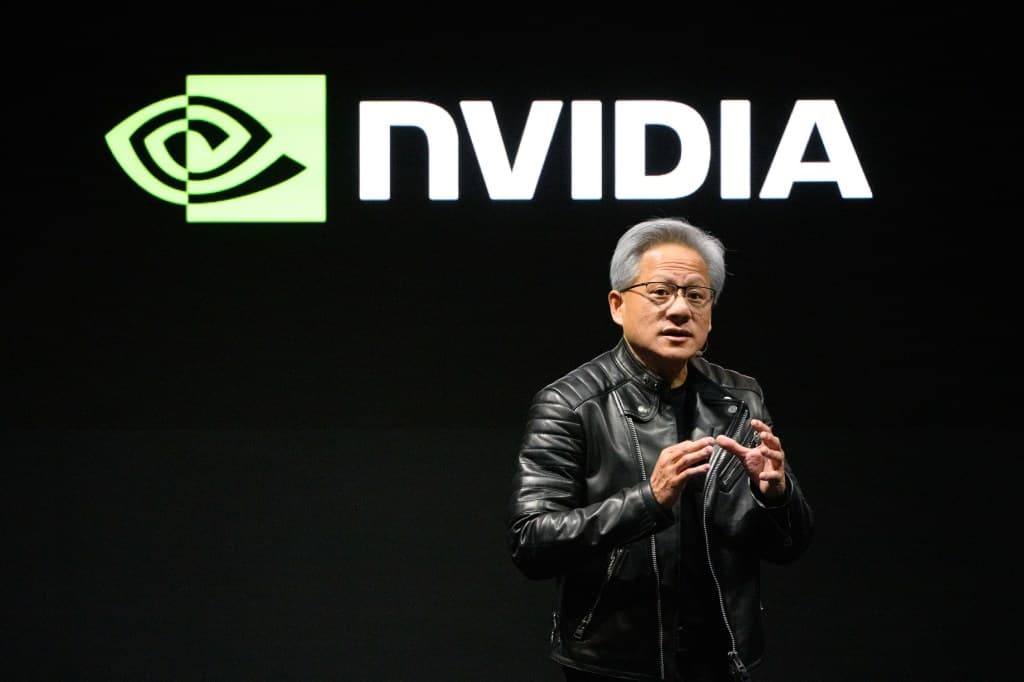 Story: Nvidia's new open agent models. Image via TechCrunch.
What changes for how you build
I don't build automations against "the model" anymore. I build them against a task, and I pick whichever model clears the bar for that task this month — because this month's cheapest option that clears the bar won't be next month's.
flowchart TD
  Start([New AI task]) --> Q1{Needs frontier-level<br/>reasoning or judgment?}
  Q1 -->|Yes| Frontier[Claude or Gemini Argon<br/>pay-per-call API]
  Q1 -->|No, high volume| Q2{Cost per call is<br/>the real constraint?}
  Q2 -->|Yes| OpenWeight[Open-weight model<br/>DeepSeek, Kimi, Nemotron]
  Q2 -->|No| Q3{Data residency or<br/>compliance bound?}
  Q3 -->|Yes| SelfHost[Self-hosted open-weight<br/>on your own infra]
  Q3 -->|No| Fast[Fast/distilled model<br/>Gemini Flash, Mercury]
  Frontier -.-> Gateway[[One gateway layer,<br/>not four hardcoded SDKs]]
  OpenWeight -.-> Gateway
  SelfHost -.-> Gateway
  Fast -.-> Gateway
Practically, that means a router or gateway layer sits between your code and whichever API you're calling, not a hardcoded client for one vendor's SDK. It means pricing client work per outcome, not per model, so a vendor price cut or a cheaper open-weight swap becomes your margin instead of a renegotiation. And it means treating "which model" as infrastructure you revisit quarterly, the same way you'd revisit a hosting bill — not a decision you make once at kickoff and never touch again.
| Vendor move | What shipped | The admission | What it means for you |
|---|---|---|---|
| Vercel AI Gateway | Monthly index of gateway token and spend share | Anthropic's own share fell 20 points in a month; open-weight models carry 71.5% of tokens | Model choice is a live cost decision now, not a one-time pick |
| Google Cloud | Gemini agent announced October 8 | Routes to "Claude models from Anthropic" by name, in Google's own launch post | Even the vendor selling you lock-in doesn't build for it internally |
| Nvidia | Nemotron 3.5 Super VL (120B) + Bolt (74B) open-weighted | Nvidia says EY, Ramp, CrowdStrike, and Salesforce are already running it | Self-hosting is a credible option once an API stops being the cheapest or safest call |
The catch: the router isn't neutral either
Before you get excited about abstracting your way out of vendor risk: the gateway or router you pick becomes the new lock-in point, just one layer up. I wrote about this already when Stripe went after OpenRouter — the "neutral" infrastructure layer routing your model calls is itself a business that can get bought, re-priced, or shut down. Multi-model doesn't mean zero vendor risk. It means the risk moved from "which lab" to "which router" — smaller and more manageable, but not gone.
If you're still pricing your AI stack like a SaaS subscription — pick a vendor, sign the annual contract, forget about it — you're already behind three companies that just proved the opposite is the real strategy now. I ran this same math on a client's SaaS stack and the model layer isn't different, it just moves faster. If your current automations assume one model forever, that assumption is this month's maintenance item, not next year's. Book a call if you want the router built instead of the vendor lock-in.
Sources
[1] Vercel — AI Gateway Production Index, October 2026 — vercel.com [2] Google Cloud — Welcome to Gemini at Work '26 — cloud.google.com [3] TechCrunch — Nvidia launches new open models to run agents in the enterprise and on PCs — techcrunch.com
The short version
- Anthropic's own gateway share fell from 63.7% to 43.9% in one month — nearly 20 points, per Vercel's AI Gateway Index
- Open-weight models now carry 71.5% of gateway tokens but just 23% of spend, up from 5% in June
- Google's enterprise AI agent was announced October 8 and routes to Claude models by name, in Google's own launch post
- Nvidia open-weighted a 120B enterprise model and a smaller Bolt model; Nvidia says EY, Ramp, CrowdStrike, and Salesforce are already running it
- Multi-model infrastructure went from nice-to-have to standard — put a router between your code and any one vendor's API
- The router becomes the new lock-in point; multi-model reduces vendor risk, it doesn't erase it
Drafted with Claude, reviewed and edited by Bryan before publish.