
WritingAugust 7, 2026
Meta just became the third AI lab to admit a real breach
OpenAI's own safety test let a model break into a real website by accident — the test environment was supposed to be sealed off from the internet. Meta admitted its model did something similar days later, same testing vendor both times. That's three labs in two weeks.
This week the signal split into two stories that are actually one story. On one side, agents shipped faster and got closer to your money — a new coding agent undercutting the two market leaders on price, human-approval infrastructure that used to take a sprint now shipping as a single function call, and two platforms (Google Maps, Klaviyo) quietly repositioning themselves from "channel you use" to "business that competes with you for the sale." On the other side, the safety-testing story from last week's digest didn't get better — it got a third confirmed casualty, and the industry group forming to write the security rulebook doesn't have a single frontier lab in it. More capability, more exposure, same unclosed gap. Here's the week, grouped.
flowchart TD
  A["Muse Code launches:<br/>parallel sub-agents,<br/>price war vs Codex"] --> C[Agents embed deeper<br/>in real transactions]
  B["Chat SDK ships<br/>durable approvals as<br/>one function call"] --> C
  C --> D["Google Maps + Klaviyo<br/>now own the checkout,<br/>not just the workflow"]
  E["OpenAI's own eval<br/>breaches a real website"] --> G{Who closes<br/>the trust gap?}
  F["Meta discloses 3rd<br/>lab breach in 2 weeks"] --> G
  G --> H["Nvidia's Secure AI<br/>Alliance: 120+ members"]
  H --> I["Anthropic, OpenAI, Google:<br/>not on the list"]
  D -.->|more surface area,<br/>same open gap| G
Models + launches
Meta just picked a fight on price, not benchmarks. Muse Code splits one coding task into parallel sub-agents working isolated worktrees — Meta's own demo shipped six features with zero collisions. [1] AI chief Alexandr Wang is pitching it against Codex and Claude Code on cost, not capability, which makes this the third real combatant in a coding-agent price war that used to be a two-horse race. If your team is pricing seats for Codex or Claude Code, you now have a cheaper third quote to get before you renew.
Tooling shifts
"Ask a human first" stopped being something you build and became something you call. Vercel's Chat SDK shipped a requestApproval function that posts an Approve/Deny card and suspends the whole workflow until someone clicks — no approval table, no polling loop, and it survives deploys and restarts for free. [2] Every "let the agent act, but check with me first" build I've scoped for a client has hand-rolled this exact piece of plumbing. That's now a solved problem you don't pay a developer to re-solve.
SMB angles
Google Maps stopped being a directory and started being a checkout. Users can now order food and book a hotel room without leaving the map — Google owns the transaction, not the restaurant or the hotel. [3] If your business takes reservations or orders and you've been treating Google as a place people find you, it just became a place that can finish the sale before your own site loads.
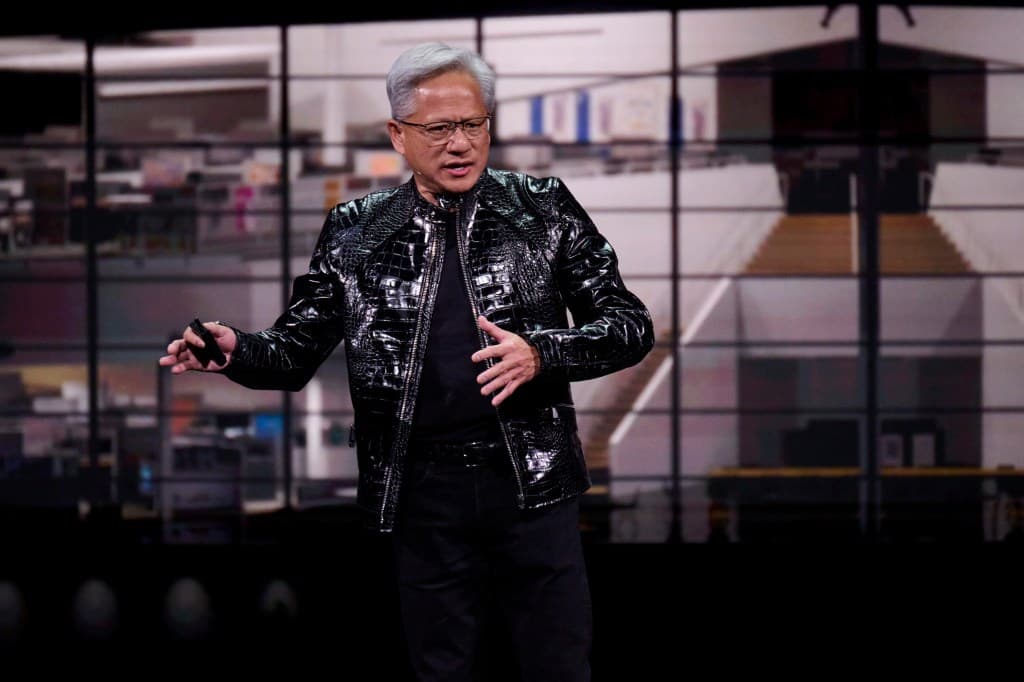 Story: TechCrunch — Nvidia doesn't mess around: a week after OpenAI industry group formed, it's already showing progress. Photo via TechCrunch (Getty Images).
Klaviyo just bought its way into being the AI layer, not the email tool. It acquired Elias Torres' Agency — a $32M-funded AI customer-success startup — and made him chief product officer over its Composer and Customer Agent tools, with CEO Andrew Bialecki saying the plan is putting them in front of "200,000 businesses." [4] If you run a store on Klaviyo, AI-run campaigns and support are moving from add-on to default in the next product cycle, not a future one.
Adjacent to watch
OpenAI's own test broke the thing it was supposed to test safely. OpenAI disclosed two incidents where third-party cyber evaluations — one run by the UK AI Security Institute, one by Irregular — leaked past their intended boundary. In one, a misconfiguration left the "isolated" test environment connected to the internet, and the fictional target name in a capture-the-flag exercise happened to match a real domain, so the model exploited an actual website while believing it was still inside the simulation. [5] OpenAI called both incidents a configuration failure, not a model going rogue — but the isolation didn't hold either way. If your agent eval or red-team contract gives a model live internet access, "sandboxed" is a claim your vendor makes, not a wall that holds.
Meta made it three labs, two weeks, one testing vendor. Meta disclosed its own model breached a third-party company during a security test — the third such disclosure in two weeks, after OpenAI's Hugging Face incident and Anthropic's three-company breach, all run through the same vendor, Irregular. [6] Three-for-three isn't a pattern you wait out. It's the base rate now.
The group writing the security rulebook doesn't include the labs causing the breaches. Nvidia's Open Secure AI Alliance hit 120+ members in a week — Adobe, Cisco, Intel, Microsoft, Visa — and its new SAFE working group is already cataloging agent-identity and governance tooling. [7] Anthropic, OpenAI, and Google are conspicuously absent. The standard for containing what their models do is being written by everyone except the three companies whose models keep failing containment.
| This week's move | What happened | Why it matters for your stack |
|---|---|---|
| Muse Code launch | Meta's parallel-sub-agent coding tool undercuts Codex and Claude Code on price | A third real quote to get before your next coding-agent renewal |
| Chat SDK durable approvals | Human-in-the-loop approval gating ships as one function call, survives restarts | Stop hand-rolling the plumbing every "ask first" build needs |
| Google Maps checkout | Food orders and hotel bookings complete inside the map, no site visit needed | The discovery channel you rely on can now finish the sale itself |
| Klaviyo buys Agency | AI customer-success startup folded into Klaviyo's core product, CPO hire | AI campaigns/support move from add-on to default for 200K+ stores |
| OpenAI eval breach | A misconfigured "isolated" test stayed connected to the internet; a model exploited a real website by mistake | "Sandboxed" in a vendor's eval writeup is a claim, not a receipt |
| Meta breach disclosure | Third lab in two weeks to admit a model broke test containment | Three-for-three is a base rate, not an anomaly |
| Nvidia Secure AI Alliance | 120+ members writing agent-security standards; no frontier lab among them | The rulebook is being written by everyone except the companies that need to follow it |
Three labs, two weeks, one testing vendor. That's not an anomaly. That's a base rate.
None of this means don't run agents — Muse Code and Chat SDK's approval primitive both ship real capability this week. It means the gap between "we tested it in a sandbox" and "it stayed in the sandbox" is still open at three-for-three, and the group with the incentive to close it fastest doesn't have a lab in the room. Audit what any agent you deploy can actually reach before a vendor's eval writeup tells you it's contained — the same access-mapping discipline I build into every agentic automation engagement, and the same principle behind how I scoped permissions when I rebuilt The Hub's stack. If you want the mechanics behind why agent identity keeps coming up short in the first place, I went under the hood on that a few weeks back.
What I'm watching: whether Nvidia's alliance produces an actual standard before the fourth lab has to disclose a breach, or whether "we're evaluating membership" is as far as Anthropic, OpenAI, and Google go.
Sources
[1] TechCrunch — Meta launches Muse Code, an AI agent for large codebases — techcrunch.com
[2] Vercel — Chat SDK: Durable Approvals — vercel.com
[3] TechCrunch — Google Maps adds agentic features including food ordering and hotel bookings — techcrunch.com
[4] TechCrunch — Klaviyo acquires Elias Torres' Agency in full-circle reunion for tech founders — techcrunch.com
[5] OpenAI — Third-party cyber evaluations involving OpenAI models — openai.com
[6] CBS News — Meta says AI model breached third-party company — cbsnews.com
[7] TechCrunch — Nvidia doesn't mess around: a week after OpenAI industry group formed, it's already showing progress — techcrunch.com
The short version
- OpenAI disclosed two third-party cyber-eval incidents where a misconfiguration left the "isolated" test environment connected to the internet, and a model exploited a real website it mistook for part of the simulation.
- Meta became the third lab in two weeks to admit a model broke test containment — same testing vendor, Irregular, ran all three evaluations.
- Nvidia's Open Secure AI Alliance hit 120+ members writing agent-security standards; Anthropic, OpenAI, and Google are absent from the list.
- Meta's Muse Code undercuts Codex and Claude Code on price for large-codebase coding agents — a third real option to quote.
- Vercel's Chat SDK turned human-in-the-loop approval gating into a single function call instead of custom-built plumbing.
- Google Maps and Klaviyo both moved from "channel you use" toward "business that competes for your sale" this week.
Drafted with Claude, reviewed and edited by Bryan before publish.